静音排気ファンを高級建築のHVAC設計にどのように組み込むことができるか?
September 02 , 2026高級建築はもはや、高価な素材、印象的なファサード、大きな窓、高級家具、洗練された照明だけで定義されるものではありません。現代の高級空間は、そこで提供される体験の質によってますます評価されるようになっています。温度、湿度、室内空気の質、音響の快適性、視覚的な清潔感、そして建物システムの信頼性といった要素すべてが、居住者が高級な環境をどのように認識するかに影響を与えます。
これらの要素の中でも、換気は最も重要な要素の一つでありながら、最も見落とされやすい要素の一つでもあります。人々は新鮮な空気、適切な湿度、そして効果的な熱除去を期待しますが、それらの恩恵をもたらす機械設備の音が常に聞こえることを望んでいません。性能は優れていても、騒音が目立つ換気システムは、高級建築物が本来目指す快適さや洗練された雰囲気を損なう可能性があります。
そのため、静音排気ファンの導入は、現代の建築空調設計において重要な検討事項となっています。単に騒音レベルの低いファンを購入するだけでは十分ではありません。真に静かな換気システムを実現するには、ファン、モーター、気流経路、ダクト、設置構造、制御システム、建材、そして建築レイアウトといった要素間の連携が不可欠です。
高級住宅、ブティックホテル、プライベートクラブ、一流レストラン、高級小売店、役員室、ウェルネス施設、高度な医療環境などでは、排気システムは目立たないように静かに稼働することが求められる場合が多い。居住者が換気システムの恩恵を享受しつつも、その存在を意識させない状態こそが、最良の結果をもたらす。
中国忠佛扇などのメーカーにとって、これはファン設計を工学的観点と建築的観点の両方からアプローチする機会となります。コンパクトな換気コンポーネントは、建物の設計プロセスの初期段階から音響特性、気流性能、物理的寸法、制御オプション、信頼性などを考慮することで、より大規模な空調システムの一部となることができます。
高級建築空間において騒音が重要な理由
騒音は、高級な環境と一般的な工業施設や作業場とでは、心理的な影響が異なります。工場、倉庫、作業場、機械室などでは、機器の騒音は環境の一部として受け入れられるかもしれません。しかし、高級ホテルの客室や個人の邸宅では、比較的小さな連続音であっても、気になることがあります。
高級建築は、しばしば静謐な雰囲気を醸し出すことを目指します。天然素材、柔らかな照明、厳選された質感、隠された設備、そして計算された空間構成を用いることで、居住者がリラックスできる雰囲気を作り出します。しかし、絶えず一定の音を発する扇風機は、そうした雰囲気を損なう可能性があります。
換気扇は長時間稼働する可能性があるため、この問題はさらに深刻になります。短時間の音であれば許容範囲内かもしれませんが、連続運転は音の感じ方を変えてしまいます。人間の聴覚は、特に周囲が静かな環境では、繰り返される音に非常に敏感です。
このため、ファンの騒音は単独の仕様として考えるべきではありません。ファンによって発生する音圧レベルは、音響結果の一部にすぎません。空気の乱流、モーターの振動、ベアリングの挙動、取り付け面、ダクトの共振、グリル設計、圧力損失など、すべてが最終的に居住者が聞く音に影響を与える可能性があります。
実験室での騒音レベルが許容範囲内のファンでも、ダクトシステムの設計が不十分だと、設置後に騒音が発生することがあります。逆に、適切なダクトと防振対策を施した、厳選されたファンを使用すれば、実際の使用環境において、はるかに静かな動作を実現できます。
この区別は、特に建築用空調システムにおいて重要です。なぜなら、ファンは多くの場合、より大きなネットワークに接続されているからです。システム全体の気流によって、ファンの運転に必要な負荷が決まります。システムが過剰な抵抗を生み出す場合、ファンはより高速で運転する必要が生じる可能性があります。高速運転は、乱流、振動、モーター音、および空気抵抗音を増加させる可能性があります。
静音換気の第一原則は単純明快だ。ファンを空気の流れシステムから切り離して設計してはならない。
静音性能は適切なファン選びから始まる
静音排気システムを構築する上で最も重要なステップは、実際の運転条件に合ったファンを選ぶことです。よくある間違いは、最大風量だけを基準にファンを選定してしまうことです。
最大風量は製品比較には役立ちますが、設置後のファンの性能を示すものではありません。ダクトシステムに空気の流れが制限されている場合、ファンは定格風量よりも大幅に少ない風量しか供給できない可能性があります。必要な風量が確保できない場合、システムはファンの回転速度や運転時間を増やすことで対応します。
より適切な選定プロセスでは、風量、静圧、動作電圧、速度、騒音レベル、寸法、ベアリングシステム、モーター設計、予想稼働時間、温度条件、および制御要件を考慮する。
コンパクトな建築用機器の場合、設置スペースが限られており、比較的開放的な換気経路を通して直接的な気流移動が必要な場合、DC軸流ファンが有効です。軸流ファン構造は、十分な気流性能を維持しながら、コンパクトなソリューションを提供できます。
しかし、すべての換気用途で軸流ファンが適しているわけではありません。システムが高い圧力を必要とする場合や、複雑な気流経路を持つ場合は、遠心ファンの方が適している場合があります。したがって、ファンは製品カテゴリーだけでなく、システムの抵抗に基づいて選定する必要があります。
空気流量と圧力の関係は特に重要です。ファンはダクトに接続された後、最大風量で動作するわけではありません。実際の動作点は、ファンの性能曲線とシステム抵抗曲線の交点によって決まります。
高級建築プロジェクトにおいては、エンジニアはファンを最終決定する前に、想定されるシステム抵抗を特定する必要があります。これには、ダクトの長さ、エルボ、フィルター、グリル、ダンパー、サイレンサー、トランジション、その他のコンポーネントが含まれます。実際の圧力要件が分かれば、過剰な速度を出さずに必要な風量を供給できるファンを選定できます。
低速走行が音響快適性を向上させる理由
ファンの回転速度は、騒音に影響を与える最も重要な要素の一つです。多くの用途において、回転速度を上げると空気抵抗による騒音が大幅に増加する可能性があります。そのため、ファン自体が技術的に静音運転に対応できる場合でも、不必要に高速回転するファンを使用しているシステムでは、音響上の問題が発生する可能性があります。
より良いアプローチは、適切なファンサイズと動作点を選択し、妥当な回転速度で必要な風量を供給できるようにすることです。
ここで、小型ファンとカスタマイズされたモーター制御が役立ちます。換気システムは、最大出力で連続運転するのではなく、可変速制御を使用してファンの性能を実際の需要に合わせることができます。
例えば、高級住宅の浴室では、シャワー中は強力な換気が必要ですが、シャワー後はそれほど換気を必要としません。常時運転式の換気扇は、通常時は低速で運転し、湿度が上昇した際には一時的に速度を上げることができます。
このアプローチにはいくつかの利点があります。不要な騒音を低減し、エネルギー消費量を削減し、機器の寿命を延ばし、室内環境をより適切に制御することができます。
PWM制御は、必要な電気アーキテクチャをサポートするシステムにおいて、より精密な速度管理も可能にします。実際の換気需要に応じてファン速度を調整することで、HVACシステムは常に最大能力で稼働する必要がなくなります。
その結果、居住者にはほとんど見えない、より高度な換気システムが実現した。
モーターとベアリングの設計の役割
モーターも音響性能に大きく影響する重要な要素です。扇風機は、羽根の間を空気が流れるだけで騒音が発生するわけではありません。電気部品や機械部品も全体の音響特性に影響を与えます。
モーターのアンバランス、ベアリングの摩擦、ローターの動き、構造的な振動、製造公差など、すべてがファンの動作に影響を与える可能性があります。
適切に設計されたブラシレスモーターは、安定した動作と正確な速度制御を実現します。ベアリングの選択も長期的な性能に影響を与えます。スリーブベアリングとボールベアリングは特性が異なるため、適切な選択は設置環境、想定される動作時間、温度、向き、および必要な耐用年数によって異なります。
スペースが限られた小型機器では、小型ブロワー製品も有効な送風ソリューションを提供できます。例えば、ブロワーファン5015は、より指向性の高い送風経路が必要な用途に適したコンパクトファンです。その適合性は、物理的なサイズだけでなく、必要な風量と圧力によって決まります。
3010型送風ファンにも同様の原理が適用されます。非常にコンパクトな送風機構造は、換気装置を狭い建築空間や隠蔽された機器室に収める必要がある場合に役立ちます。しかし、小型だからといって必ずしも静音運転が保証されるわけではありません。モーター、インペラ形状、圧力要件、取り付け構造、運転速度など、すべてを総合的に評価する必要があります。
高級プロジェクトにおいては、単に購入コストを可能な限り低く抑えることではなく、安定した予測可能な運用を目標とすべきである。
振動が騒音になる前に低減する
HVAC設計において、振動はしばしば見落とされがちです。エンジニアは音圧レベルにばかり注目し、建物の構造を通して機械的な振動がどのように伝わるかを十分に考慮しないことがあります。
金属製のパネルに直接取り付けられたファンは、振動を周囲の構造物に伝達する可能性があります。その結果、パネルが音響放射体として機能することがあります。静かな部屋では、ファン自体の騒音レベルが比較的低くても、この振動が目立つようになることがあります。
したがって、適切な取り付けは大きな違いを生む可能性がある。
柔軟な取り付け部品、防振材、バランスの取れた回転部品、正確な組み立て、適切な構造支持により、振動伝達を低減できます。
取り付け面も考慮する必要があります。薄い金属パネルは、厚い構造パネルとは異なる振動増幅効果を示す可能性があります。周囲の筐体は共振周波数を発生させ、特定のファン動作速度での振動をより顕著に感じさせる場合があります。
だからこそ、音響工学はプロジェクトの最後に付け加えるのではなく、機械的な接合部から始めるべきなのです。
建築との一体化と隠蔽型換気システム
高級建築の特徴の一つは、視覚的な清潔感である。デザイナーは、隠された設備、一体型のグリル、最小限の開口部、そして継ぎ目のない表面を好むことが多い。
したがって、換気システムは目に見える機械的な物体となるのではなく、建築構造に調和するものでなければならない。
Fans can be positioned inside ceiling voids, service cavities, equipment compartments, bathroom ceiling systems, kitchen ventilation structures, furniture systems, or dedicated mechanical zones.
The challenge is to maintain sufficient airflow while preventing the fan from being obstructed.
A concealed fan still requires sufficient intake and discharge area. If the opening is too small, airflow resistance increases. If the grille is poorly designed, turbulence and noise may increase.
The ideal architectural solution balances three requirements. The fan should remain visually discreet, the airflow path should remain efficient, and maintenance access should remain practical.
This is particularly important in luxury residences where architectural finishes can be expensive and difficult to remove. A ventilation component that requires extensive ceiling demolition for routine maintenance can create a poor long term ownership experience.
Designing Maintenance Into The Architecture
A quiet exhaust fan is only successful if it remains quiet throughout its service life.
Dust accumulation, bearing wear, blade contamination, loose mounting components, and blocked airflow paths can gradually change fan performance. A system that was almost silent during commissioning may become more noticeable after years of operation.
Maintenance access should therefore be considered during the design stage.
Service panels can be hidden within architectural details. Removable grilles can provide access to filters and fan components. Modular fan assemblies can make replacement easier.
For high end buildings, maintenance should not require compromising the appearance of the interior. The service solution should be planned with the same attention given to lighting, plumbing, and electrical equipment.
This is one reason why fan manufacturers should communicate closely with HVAC engineers and architectural teams. Product dimensions, connector positions, mounting holes, airflow direction, replacement procedures, and service clearances can all influence the final building design.
Quiet Exhaust Fans In Luxury Bathrooms
Bathrooms are one of the clearest examples of why quiet exhaust ventilation matters.
A luxury bathroom may include stone surfaces, glass, wood, decorative metal, large mirrors, and other hard surfaces. These materials can reflect sound and create a more acoustically sensitive environment.
At the same time, bathrooms require effective humidity removal. Steam generated by showers and hot water can increase humidity rapidly. Without adequate exhaust, moisture may remain inside the room and contribute to condensation, odors, and long term material problems.
The ventilation system therefore has to remove humid air without becoming the dominant sound source.
A variable speed exhaust fan can provide a practical solution. During normal operation, the fan can run at a lower speed. When humidity increases, the control system can temporarily increase airflow.
This creates a ventilation pattern that follows actual demand instead of operating continuously at maximum capacity.
For luxury hotels and private residences, this type of control can significantly improve the perceived quality of the bathroom environment.
Luxury Kitchens Require Another Approach
Kitchen ventilation is more demanding because cooking generates heat, moisture, grease, odors, and particles.
A quiet fan cannot simply be selected based on sound level. It must also be capable of handling the required airflow and pressure conditions.
Duct length, bends, filters, dampers, and exhaust outlets can create substantial resistance. If the fan is undersized, airflow may be insufficient. If the fan is oversized and operated at unnecessarily high speed, noise may become excessive.
The design should therefore begin with the required airflow and pressure and then optimize the fan operating point.
In premium kitchens, the fan may also be separated physically from the occupied space. Placing the primary fan in a remote service location can reduce the amount of mechanical noise reaching the kitchen while maintaining effective air extraction.
This approach demonstrates an important architectural principle. Sometimes the quietest fan is not simply a quieter fan. It is a fan placed in a better location.
Quiet Ventilation In Luxury Hotels
Hotels present an even more complex challenge because the same HVAC principles must work across hundreds of rooms.
Guests have different expectations and different sensitivity to sound. A ventilation system that is acceptable to one guest may be noticeable to another.
Hotel rooms also have nighttime operating requirements. Guests may sleep while ventilation continues to operate.
Low speed continuous ventilation can therefore be useful when properly designed. Instead of allowing the fan to cycle between noisy high speed operation and complete shutdown, a controlled low speed mode can maintain background ventilation while minimizing acoustic disturbance.
Bathrooms can use humidity based demand control. Service rooms can use scheduled operation. Public areas can respond to occupancy. Conference rooms can respond to carbon dioxide or air quality sensors.
The overall objective is to make ventilation responsive without making the mechanical system noticeable.
Luxury Offices And Executive Spaces
Executive offices, boardrooms, private meeting rooms, and premium commercial interiors also require acoustic control.
A ventilation fan located near a conference room can interfere with speech intelligibility. A repetitive tonal noise can make conversations more difficult and can affect the perceived quality of meetings.
In these environments, fan selection should be coordinated with the acoustic requirements of the room.
The HVAC designer should consider not only the fan sound level but also duct breakout noise, grille noise, vibration transmission, and background sound.
A well designed system can locate fans away from occupied zones and use properly sized ductwork to distribute air quietly.
This is especially important in executive environments where confidentiality and concentration are important.
Wellness Spaces And Luxury Spas
Spas, wellness centers, meditation rooms, and premium fitness spaces place particularly high demands on acoustic comfort.
These environments are intentionally designed to reduce stress. Water features, natural materials, soft music, and controlled lighting are often used to create a peaceful atmosphere.
Ventilation must support humidity control and air quality without disturbing the experience.
In spa environments, humidity may be significantly higher than in ordinary commercial spaces. Fan materials, motor protection, bearing selection, and electrical protection should therefore be evaluated according to the actual environmental conditions.
Quiet operation remains important, but environmental reliability cannot be sacrificed for acoustic performance.
This is another reason why fan customization can be valuable. The ideal solution may require a specific voltage, airflow range, speed profile, material configuration, protection level, or control method.
The Importance Of Ductwork
Even the best quiet fan can become noisy when connected to poorly designed ductwork.
Small ducts increase air velocity. High velocity can generate turbulence and aerodynamic noise. Sharp elbows can create additional pressure loss. Poorly designed transitions can generate flow separation.
The solution is not necessarily to reduce fan speed alone. The entire airflow path should be optimized.
Duct diameter, length, bend radius, grille area, filter selection, and outlet geometry should be evaluated together.
A larger duct can sometimes allow the same airflow to move at a lower velocity, reducing turbulence. Smooth transitions can reduce pressure loss. Properly designed grilles can improve air distribution.
The fan and ductwork should therefore be treated as one system.
Acoustic Treatment And Fan Placement
Physical distance can also be an effective acoustic design tool.
If the fan can be located away from bedrooms, living rooms, meeting rooms, or relaxation areas, the perceived sound can be reduced.
Remote fan placement is particularly practical when the building includes accessible service zones. The fan can be positioned in a ceiling service cavity or mechanical room while the occupied room receives only the airflow through a properly designed duct system.
Acoustic lining and silencers can also be used where appropriate. However, these components create additional pressure resistance, so they must be included in the fan selection process.
Adding acoustic treatment after the fan has already been selected can cause unexpected airflow problems.
The best sequence is to calculate system resistance, select the fan, evaluate noise, and then optimize the complete system.
Smart Controls Make Quiet Ventilation More Effective
Modern luxury buildings increasingly rely on automation.
Ventilation can be connected to humidity sensors, temperature sensors, occupancy sensors, air quality sensors, timers, building management systems, and smart home platforms.
This creates opportunities for more precise fan operation.
Instead of running continuously at full speed, the system can respond to actual conditions.
A bathroom fan can increase speed when humidity rises. A storage room can operate according to a schedule. A private gym can increase ventilation when occupancy increases. A hotel room can maintain low background ventilation when occupied and adjust operation after the guest leaves.
This type of demand based control can improve both comfort and efficiency.
It also supports the architectural objective of invisibility. The ventilation system becomes something that reacts automatically rather than something occupants have to manage manually.
Energy Efficiency And Quiet Operation
Energy efficiency and acoustic comfort can support each other when the system is designed correctly.
Running a fan faster than necessary consumes additional power and may create unnecessary noise. A correctly sized fan operating near an efficient point can provide the required airflow without excessive energy use.
Variable speed operation can further reduce energy consumption during periods of low demand.
In large luxury buildings, even a small reduction in fan operating power can become meaningful over the lifetime of the building.
The energy strategy should therefore not focus only on the motor efficiency rating. It should consider the entire operating profile.
A fan that is efficient at maximum speed but spends most of its life operating at unnecessary capacity may not provide the best real world solution.
Customization For Architectural Projects
Standard fan products are useful for many applications, but luxury architectural projects often have unusual space and integration requirements.
A fan may need to fit into a specific cavity. The connector may need to face a particular direction. The mounting pattern may need to match an existing bracket. The operating voltage may need to match the building control system.
The fan may also require customized speed control, airflow direction, cable length, material, bearing configuration, or protection features.
This is where an experienced fan manufacturer can contribute beyond simply supplying a catalog product.
China Chungfo Fan can approach the application from the perspective of the actual equipment environment. Instead of treating the fan as an isolated component, the manufacturer can work with project requirements to identify the required airflow, pressure, voltage, dimensions, speed, noise target, and control method.
For architectural HVAC projects, this cooperation can shorten the gap between mechanical engineering requirements and the physical realities of the building.
Testing Before Mass Deployment
Luxury projects often involve significant investment in finishes and equipment. It is therefore advisable to validate ventilation performance before large scale installation.
Prototype testing can evaluate airflow, pressure, noise, vibration, temperature, and control behavior.
Acoustic testing can also identify unexpected tonal noise or structural vibration.
If a fan sounds acceptable in open air but becomes noisy after being installed inside an enclosure, the test environment can reveal the problem before the final architectural finishes are completed.
This is particularly valuable for hotel developments, premium residential towers, private clubs, medical facilities, and other projects where repeated modifications are expensive.
The goal is not simply to verify that the fan works. The goal is to verify that the complete ventilation system works as intended within the architectural environment.
Why Fan Manufacturers Should Understand Architecture
Traditional fan engineering often focuses on airflow, pressure, motor performance, temperature, and reliability.
Those specifications remain essential, but architectural applications require a broader perspective.
A fan may be technically excellent but difficult to integrate. It may provide high airflow but require too much space. It may be quiet in laboratory testing but create vibration after installation. It may be reliable but difficult to access for maintenance.
Architectural HVAC therefore requires collaboration between several disciplines.
Mechanical engineers determine airflow and pressure requirements. Electrical engineers determine power and control requirements. Acoustic engineers evaluate noise and vibration. Architects determine visual integration and spatial constraints. Facility managers consider maintenance and long term operation.
The fan manufacturer sits at the center of these requirements because the fan connects the electrical, mechanical, acoustic, and architectural systems.
A manufacturer capable of understanding these interactions can provide greater value than a supplier that only provides a specification sheet.
The Future Of Quiet Architectural Ventilation
The future of luxury HVAC design will likely move toward smaller, smarter, quieter, and more responsive ventilation systems.
Fans will increasingly operate according to actual environmental demand rather than fixed schedules.
Compact motors and improved control electronics will make variable speed operation more practical.
Sensors will provide more information about humidity, occupancy, air quality, and temperature.
Architects will increasingly expect ventilation components to disappear into the building rather than dominate the ceiling or wall.
At the same time, maintenance and reliability will remain critical. A luxury building cannot depend on a system that performs well only during the first few months of operation.
The most successful solutions will combine quiet mechanical design, efficient airflow, intelligent control, robust materials, reliable motors, and service friendly installation.
How To Specify A Quiet Exhaust Fan For A Luxury Project
The specification process should begin by identifying the actual ventilation requirement.
The design team should determine the required airflow, expected static pressure, operating schedule, available installation space, electrical supply, environmental conditions, acoustic target, control strategy, and maintenance requirements.
The next step is to identify the appropriate fan architecture.
An axial fan may be suitable for direct airflow applications with relatively low system resistance. A blower or centrifugal structure may be more suitable when the system requires higher pressure or directional airflow.
The fan should then be evaluated at its real operating point rather than only at free air conditions.
Noise should be evaluated together with vibration and installation conditions.
The mounting method should be designed before construction.
Ductwork should be sized to avoid unnecessary air velocity and pressure loss.
Control systems should be configured so that the fan operates according to actual demand.
Finally, prototype testing should be performed whenever the project has strict acoustic or architectural requirements.
This process creates a more predictable result and reduces the risk of expensive modifications after construction.
Conclusion
A quiet exhaust fan can be much more than a mechanical component inside a luxury building. When correctly integrated, it becomes part of the invisible infrastructure that supports comfort, air quality, humidity control, energy efficiency, and the overall feeling of refinement.
The key is to stop thinking about quietness as a single fan specification.
True acoustic performance depends on the interaction between the fan, motor, bearing, blade design, airflow, pressure, ductwork, mounting structure, architectural materials, controls, and maintenance strategy.
Luxury architecture demands this level of coordination because the mechanical system must deliver strong performance without becoming visually or acoustically dominant.
For bathrooms, kitchens, hotels, executive offices, spas, private residences, and premium commercial spaces, the right ventilation strategy can provide clean air and humidity control while remaining almost unnoticed.
China Chungfo Fan can support this approach by combining fan engineering with application based customization. From compact ventilation components to larger cooling and exhaust solutions, the right fan should be selected according to the complete system rather than one isolated specification.
The future of luxury HVAC is not simply about moving more air. It is about moving the right amount of air, at the right speed, through the right pathway, with the lowest practical acoustic and energy impact.
When ventilation becomes almost invisible, the architecture can speak for itself.
FAQ
What makes an exhaust fan suitable for luxury architectural HVAC?
A suitable exhaust fan should provide the required airflow and pressure while maintaining low acoustic output, low vibration, reliable operation, compact dimensions, and appropriate control capability. The fan must also be easy to integrate into the architectural and mechanical design.
Is a quiet exhaust fan always better than a high airflow fan?
Not necessarily. A fan must provide sufficient airflow for the application. Selecting an extremely quiet fan that cannot overcome system resistance may result in poor ventilation. The correct approach is to balance airflow, pressure, speed, efficiency, and acoustic performance.
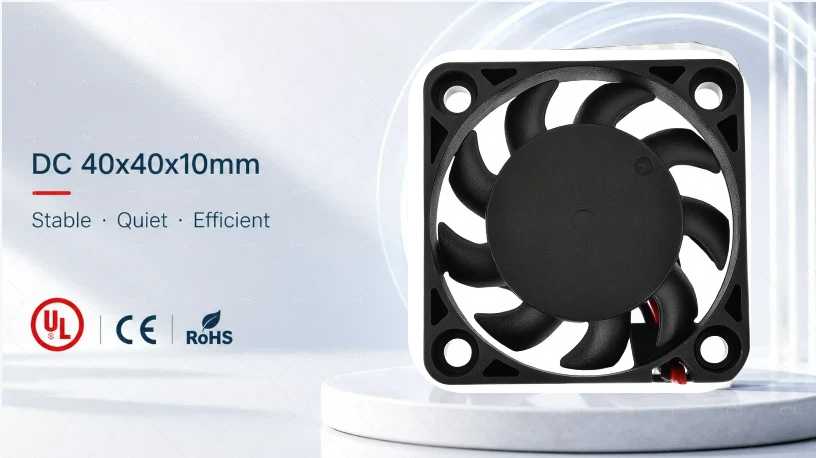
Can a DC Axial Fan be used in architectural ventilation?
Yes, depending on the system design. ADC Axial Fancan be suitable for compact ventilation and cooling applications where the airflow path has relatively manageable resistance. The actual suitability should be determined by the required airflow and static pressure.
Why does a fan become louder after installation?
Installation can introduce additional resistance, turbulence, vibration, and resonance. Ductwork, grilles, mounting panels, and enclosures can all change the acoustic behavior of a fan. This is why system level testing is important.
How can fan speed control reduce noise?
Reducing fan speed during periods of low ventilation demand can reduce aerodynamic noise and mechanical activity. Variable speed control allows the fan to increase output only when higher ventilation is required.
Are small blower fans useful for luxury HVAC equipment?
Small blower fans can be useful where space is limited and a more directed airflow path is required. Products such as ablower fan 5015or a3010 blower fanmay be considered for compact equipment, but the correct model must be selected according to airflow, pressure, dimensions, and operating conditions.
How should fan vibration be controlled?
Proper balancing, bearing selection, rigid but suitable structural support, vibration isolation, and accurate installation can reduce vibration transmission. The surrounding enclosure should also be evaluated because structural resonance can amplify mechanical vibration.
Can a ventilation fan be completely hidden?
Yes. Fans can be installed inside ceiling cavities, service compartments, equipment cabinets, bathroom ceiling systems, or remote mechanical spaces. However, sufficient airflow clearance and maintenance access must still be provided.
How does ductwork affect exhaust fan noise?
Duct size, air velocity, elbows, transitions, filters, dampers, and grilles affect system resistance and turbulence. Poor duct design can force the fan to operate at higher speed and can generate additional aerodynamic noise.
Why is variable speed ventilation useful in luxury buildings?
Variable speed ventilation allows the system to respond to actual demand. It can provide lower background ventilation during normal conditions and increase airflow when humidity, occupancy, or air quality conditions require additional ventilation.
What should architects consider when integrating a quiet fan?
Architects should consider fan dimensions, installation location, access for maintenance, airflow openings, grille appearance, vibration transmission, duct routing, acoustic requirements, and coordination with ceilings and interior finishes.
Why should fan manufacturers participate early in a project?
Early cooperation allows the fan to be selected according to actual airflow, pressure, space, voltage, control, acoustic, and maintenance requirements. This can reduce the risk of redesign and improve integration between the HVAC system and architectural design.
What role can China Chungfo Fan play in luxury HVAC projects?
China Chungfo Fan can provide fan solutions based on application requirements, including airflow, pressure, voltage, dimensions, speed, noise, control, and installation conditions. For specialized projects, customized fan development can help bridge the gap between standard products and specific architectural HVAC requirements.